Event vehicle and pedestrian separation brief template
A load-in timetable alone cannot make a site route safe. This worksheet helps an organizer describe who moves where and when, so the venue and competent traffic team can approve separation measures. It is a handoff for site-specific review, not a public-road traffic plan, crossing design or marshal instruction.
Boletolibre editorial team
Published
Overlay people and vehicle movements on one map
Download the editable vehicle-pedestrian conflict brief (Markdown, English)
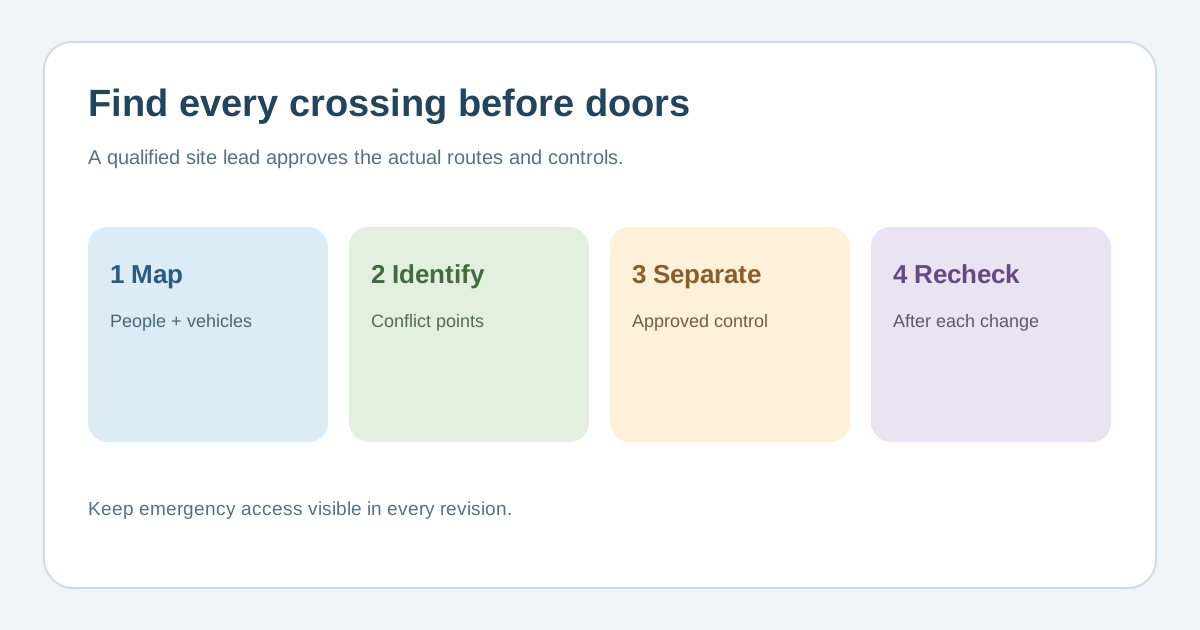
Mark guest arrivals, accessible paths, queues, staff and backstage paths, exits and emergency access. On the same dated plan, trace supplier trucks, carts, waste collection, caterers, accessible drop-off and emergency vehicles through load-in, public opening and load-out. Identify gates, reversals, crossing points and locations where a delayed vehicle could meet a crowd.[1][2]
Resolve each conflict by approved space or time
For each crossing, ask the qualified lead whether the routes can be kept apart physically or whether the vehicle task can finish before the public arrives. Where neither is possible, record the approved control, authorized operators, stop conditions and how people are informed. Do not assume a volunteer may direct public-road traffic or that a generic barrier makes a crossing safe.[2][3]
Assign gate, driver and pedestrian decisions
Name the person who releases each vehicle, the site contact who confirms the path is available, and the person who can stop the move if a pedestrian route changes. Drivers and stewards need the same current map and radio or phone route. Keep emergency access available and confirm any public-road control, closure or diversion with the competent local authority.[1][2]
Walk the plan as the site changes
Review the crossing points before load-in, before doors, during resupply and before load-out. Log blocked routes, changed weather or ground, extra deliveries and any deviation; pause a movement that no longer fits the approved plan. Record who revised and accepted the site traffic arrangement. The worksheet alone does not certify the design or authorize road control.[1][2]
Sources and further reading
- Event Traffic Management Plan (Template)Northern Ireland Department for Infrastructure · Accessed
- Transport at eventsUK Health and Safety Executive · Accessed
- Put crowd controls in placeUK Health and Safety Executive · Accessed