Safe event queue planning checklist: route, holding area and escalation
A check-in lane calculation does not tell you where the waiting crowd will stand. Use this site worksheet with the venue and competent crowd lead to trace the approach, holding area, service point and overflow before doors open. The worksheet records questions and owners; it does not approve a crowd capacity or barrier layout.
Boletolibre editorial team
Published
Walk the whole queue path, including overflow
Download the editable event queue site review worksheet (Markdown, English)
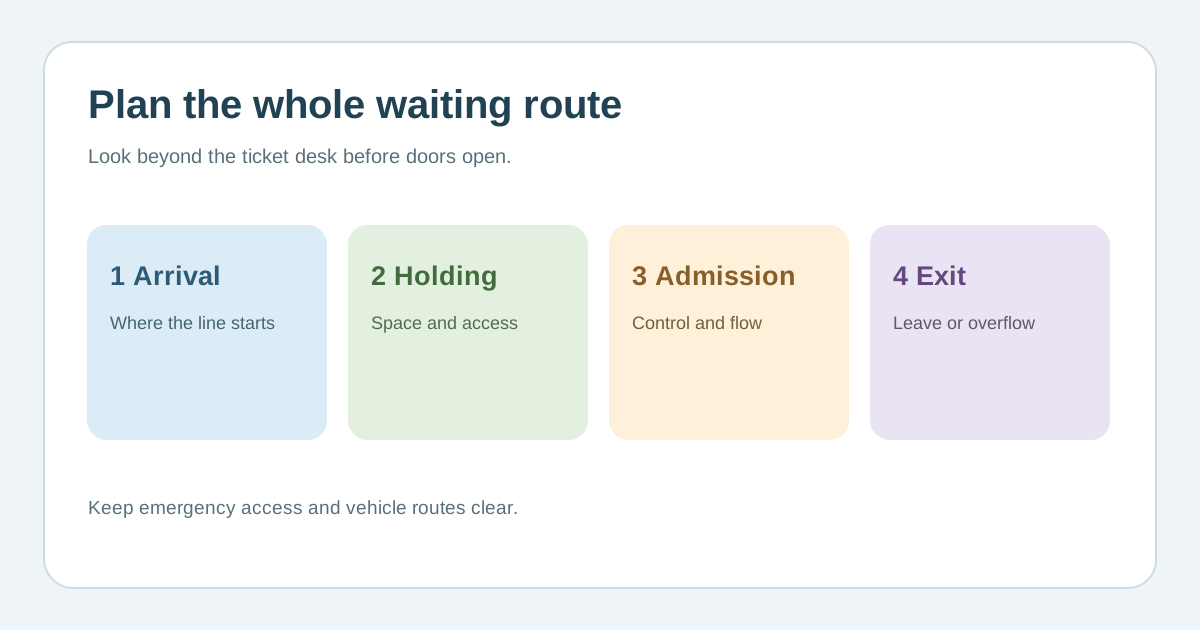
On the actual site plan, mark transport arrivals, the queue start, turns, holding area, ticket or search point and post-entry dispersal. Ask where people will wait if arrival is faster than admission, whether the line crosses another flow, and where someone can leave without pushing against the line or entering vehicle traffic. Keep emergency access, exits and neighboring property in the reviewed plan.[2][3][1]
Plan a usable route and waiting conditions
Walk the route with accessibility and venue leads. Check how people with mobility, sensory or communication needs find and use the same admission process, and how staff offer assistance without sending anyone into traffic or an unplanned shortcut. Review lighting, ground conditions, weather exposure, water or shelter arrangements and clear information about expected wait, without promising a fixed time.[3][1]
Give stewards a live decision route
Name the queue lead, stewards at start and pinch points, the person watching arrivals and the person authorised to change or pause admission. Agree observable signs of unsafe pressure, blocked exits, vehicle conflict or overspill and the route for immediate escalation under the approved crowd plan. A longer line is not automatically safe just because the ticket check is moving.[2][3]
Rehearse changes before the line forms
With the venue and qualified crowd team, walk the planned queue, alternative route and safe dispersal message. Confirm barriers, signs and staffing against the actual layout; do not invent a universal width or density. Record who accepts any last-minute change and what must be rechecked after a gate, screening or weather change. If the approved holding area cannot contain the arrival, activate the reviewed overflow or stop-entry decision.[2][1]
Sources and further reading
- Event Management Safety ChecklistThe Ohio State University Student Life Risk and Emergency Management · Accessed
- Put crowd controls in placeUK Health and Safety Executive · Accessed
- Assess crowd safety risks and identify hazardsUK Health and Safety Executive · Accessed