Accessible event entrance operations checklist: a day-of staff handoff
A route can pass an inspection and still fail on event day if its door is locked, a queue blocks it or no one knows who can help. Use this checklist to turn the venue access plan into a staffed admission service. It covers the operating shift, not the architectural assessment or a legal compliance certificate. Confirm local requirements with the venue and a qualified accessibility lead.
Boletolibre editorial team
Published
Activate the route before doors open
Download the editable entrance shift handoff (Markdown, English)
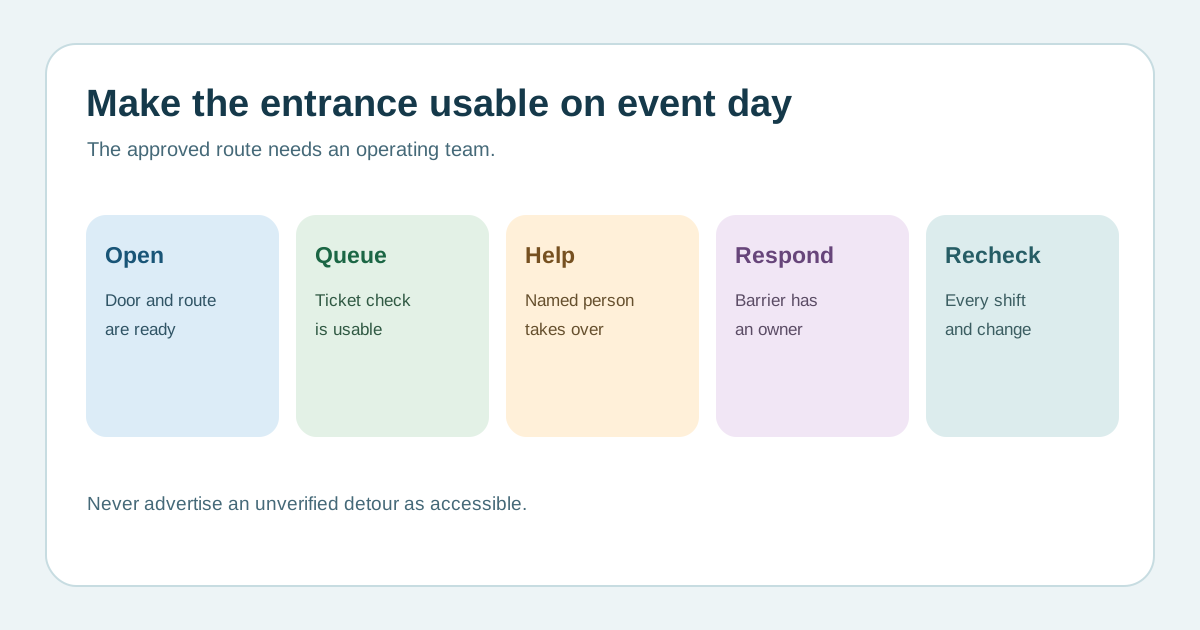
Walk the approved path from arrival points to the entrance, check-in, event space and essential services in the actual setup. Check that the door is open or has a working assistance method whenever other public entrances operate. Remove temporary barriers such as cables, furniture and queue rails; confirm signs at decision points and alternative entrances. USC asks organizers to choose accessible entrances and clear pathways, and to have informed staff available during the event.[1][2]
Make the queue and ticket check usable
Map how a guest reaches the ticket scanner or help desk without being sent to a distant unstaffed entrance. Give the entrance team the same ticket-validation and exception path as the general queue. Decide how staff can offer a place to wait or assistance without asking for a diagnosis or making a public announcement about a person’s needs. HSE treats arrival routes, queuing space and entrances as one crowd-management task; check the actual setup with the venue.[1][3]
Assign a live assistance handoff
Name the entrance lead, accessibility contact and backup by shift. Tell every greeter how to request help, where to meet the guest and who will accompany them to the event space if needed. Check that staff know the location of lifts, toilets, seating, assistive services and an accessible exit route. The USC checklist specifically calls for available organizers or designees and basic accessibility information for all staff.[1][3]
Prepare a route-failure response
If a lift, door or path fails, stop directing guests into the blocked route, contact the venue access lead and confirm a usable alternative before announcing it. Put a trained person at the decision point to explain the change and offer assistance. Record the affected service, decision owner, correction and time; update public directions and staff instructions together. Do not describe an unverified detour as accessible.[1][2]
Recheck during admission and after changes
Repeat the walk when barriers, crowd layout, weather or staffing change. Ask the next shift to confirm the door, signs, queue and contacts in person. Log an unresolved barrier for the responsible venue and organizer leads, then retest before marking it resolved. The US DOJ primer discusses accessible entrances and keeping routes clear in its US public-sector context; local law and site approval still need their own review.[1][2]
Sources and further reading
- Accessible Event ChecklistUniversity of Southern California, Institutional Accessibility and ADA Compliance · Accessed
- ADA Update: A Primer for State and Local GovernmentsUS Department of Justice · Accessed
- Put crowd controls in placeUK Health and Safety Executive · Accessed