Compare event ticketing payout terms without guessing the deposit date
A platform may say “paid as tickets sell,” but that can mean funds reach a processor account while the bank deposit follows a different schedule. Another platform may show an after-event default yet offer earlier payouts to eligible organizers. The first organic Google result for this topic groups fifteen platforms into payout models. That is useful search-intent evidence, but a provider-produced comparison is not a substitute for the current terms that apply to your country, account, payment methods and contract. Compare one complete route at a time.
Boletolibre editorial team
Published
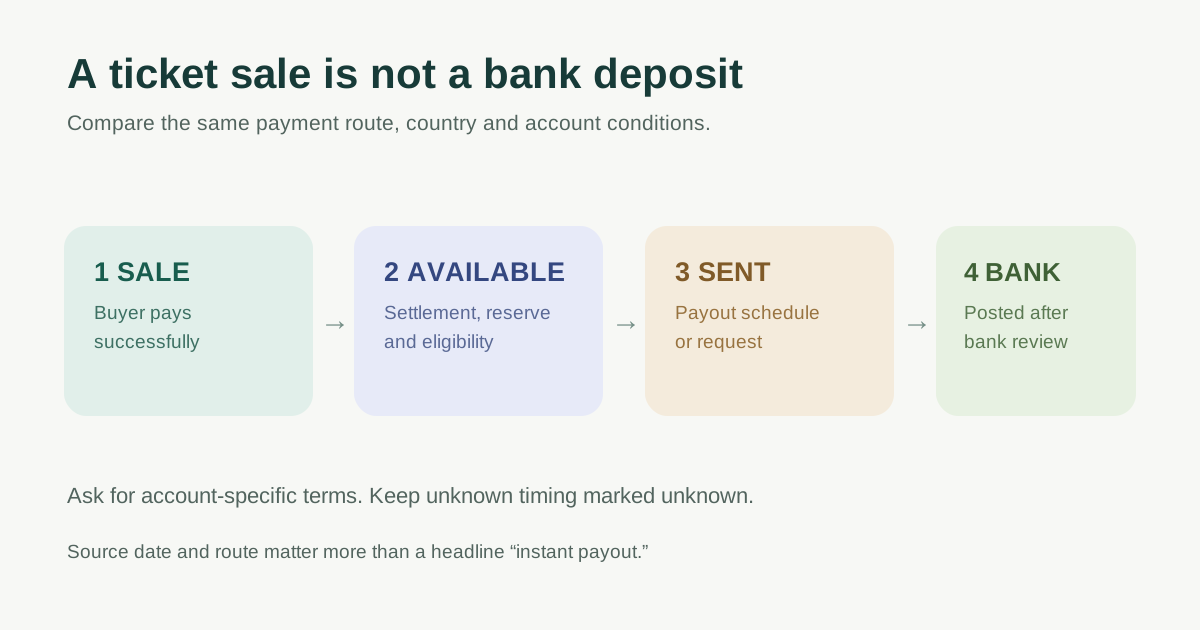
Trace funds from buyer to the bank
Record the legal merchant or payment account that receives each transaction, whether the ticketing platform holds a balance, when funds become available for payout, when the payout is initiated, and when the bank posts it. These are different events. Stripe says the first payout can take longer than later ones; subsequent payouts depend on settlement timing, account schedule and bank processing. Do not turn “daily payouts” into “money in bank tomorrow” without checking all those steps.[6]
| Question | Why it matters | Evidence to request |
|---|---|---|
| Who receives buyer funds? | Identifies the payment route and refund balance owner | Account or merchant agreement |
| When do funds become available? | A sale is not yet withdrawable cash | Processor or platform schedule |
| When is a payout sent? | May be event-based, periodic or requested | Dated account-specific setting |
| What can be held? | Reserve, cap, review or dispute can reduce availability | Written reserve and eligibility terms |
| When does the bank post it? | Arrival may lag the send date | Bank processing assumptions and currency |
Compare the same country, account age and payment route
Eventbrite says a new organizer’s first payout is sent after the event. Its help also describes earlier schedules for eligible accounts, with reserve and cap conditions. Therefore a flat label such as “Eventbrite pays only after the event” hides a material distinction. Ask whether your account, event, currency and payment option qualify, then document the actual schedule visible in your dashboard or agreement.[2][3]
Humanitix describes a default payment gateway and a connected Stripe route. The connected route sends eligible card sales to the organizer’s Stripe account, where Stripe’s payout terms apply; some alternate payment methods remain on the default route. Humanitix also describes early payout requests on its default gateway. Check the exact method mix, fee deductions and approval terms for your event. Different help pages describe a range of post-event processing times, so obtain a written account-specific expectation rather than publishing one universal number.[4][5]
The leading Hi.Events comparison is produced by a ticketing vendor and uses broad category labels. Keep its table as a discovery list, not as proof of what any competing provider will pay your organization on a specific date. Verify each finalist in its official documentation and written quote.[1]
Download the payout-terms comparison worksheet
Use the editable worksheet once for each provider and payment route. Date every source. Enter country, payout currency, first-event status, estimated event end, payment-method mix, eligibility, reserve, cap, adjustments and bank lag. Ask the provider to complete unknown fields; “unknown” is safer than an assumed zero reserve. Compare the amount available by each supplier due date, not just the label on the payout schedule.
Download the event payout comparison worksheet (Markdown)
Keep fee comparisons in the separate payment-fee guide. A payout deduction can include platform fees, processing, refunds, disputes, taxes or previous negative balances depending on the route. Ask for a sample settlement statement and reconcile it against your own event scenario before signing.
Match the payout route to your obligations
List venue deposits, supplier dates, payroll and refund exposure on one timeline. If ticket proceeds arrive after a bill is due, name the other funding source or renegotiate the schedule before relying on sales cash. If proceeds arrive early, keep enough available to meet potential refunds and chargebacks under the applicable terms. This is an operational comparison, not a promise of financing or a recommendation to use a specific provider.
Recheck the provider pages and your written agreement just before publication or procurement, and again if the event date, country, merchant account or payment methods change. After sales begin, use the actual payout report rather than this pre-sale worksheet to reconcile deposits.
Sources and further reading
- Ticketing Platform Payouts ComparedHi.Events · Accessed
- Get started with event payoutsEventbrite Help Center · Accessed
- Set up a payout scheduleEventbrite Help Centre · Accessed
- When will my event be paid out?Humanitix Help Centre · Accessed
- Payment processing options for your Humanitix eventHumanitix Help Centre · Accessed
- Receive payoutsStripe Docs · Accessed