Event bag policy template: explain bag checks before arrival
The most useful bag policy answers an attendee’s practical question: “Can I bring this, and what happens at the door?” Publish the event-specific answer before travel, then give screeners the same approved version. This template helps an organizer write that notice; it does not set security rules or authorize searches.
Boletolibre editorial team
Published
Agree one event-specific policy before publishing
Confirm the venue, promoter, security lead and accessibility lead agree on permitted bags, how size is measured, prohibited categories, any inspection method, exceptions or alternative arrangements, and what happens when an item is refused. T-Mobile Arena’s first-ranking policy is a useful example of the attendee-facing structure: it puts bag dimensions, a bag-check option and prohibited items together. Its numerical limits and item list apply to that arena, not automatically to your event.[1]
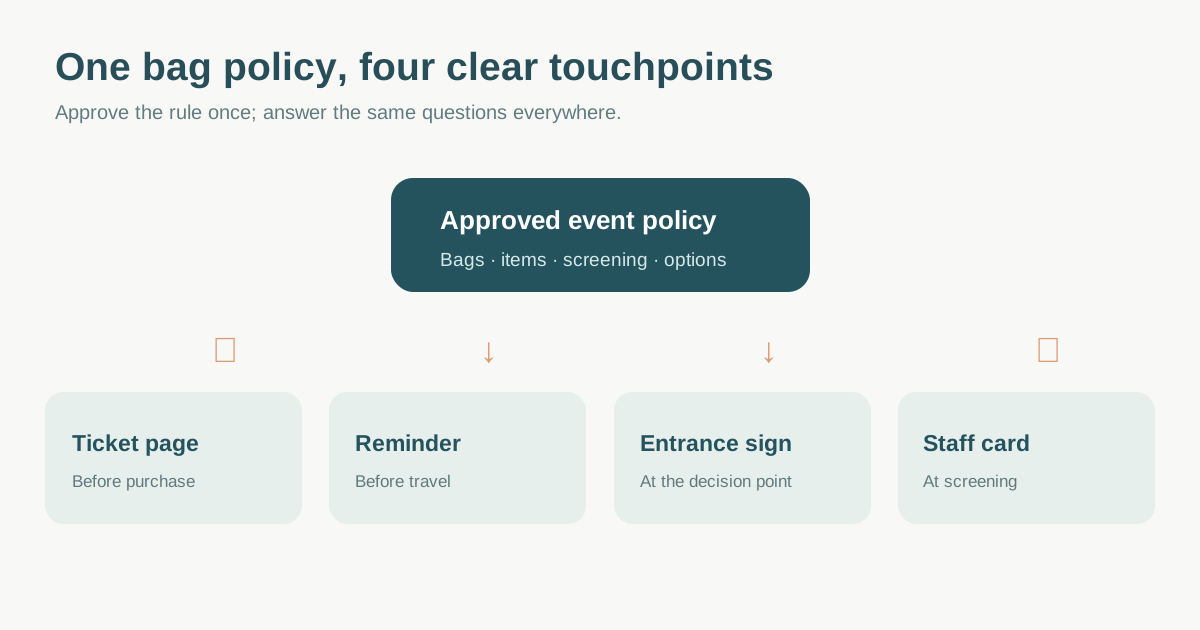
Record who can change the policy and how an update reaches the event page, ticket email, entry signs and staff brief. Make the event date and policy revision visible, especially when a tour or venue can change a rule. Do not promise storage, refunds, re-entry, medical exceptions or confiscation rights unless the responsible operator has approved the exact arrangement.
Answer the questions people ask on the way to the gate
Lead with a short permitted-bag rule, units and a measurement example. Follow with the prohibited-items list, a clear “what if I arrive with one?” answer, and any real bag storage location, fee, opening hours and retrieval process. Explain when screening begins, which entrances offer it, and where attendees can ask a private question about an essential item or accessibility need. If there is no storage, say so plainly rather than sending someone to a service that does not exist.
| Attendee question | Information to publish |
|---|---|
| What bag can I bring? | Allowed type, maximum dimensions, whether it must be clear, how straps are treated |
| What stays outside? | Event-approved prohibited categories and any specific exceptions |
| What if I bring the wrong item? | Return, approved storage or refusal path; actual costs and re-entry rule |
| Where and when is the check? | Entrance, opening time, expected process and accessible alternative |
| Who can resolve a question? | Named guest-services channel and on-site help point |
CISA’s public-venue screening guide recommends advance answers to common visitor questions and consistent wording across screening staff. Use that principle to write a short public FAQ and a matching staff answer card; do not publish sensitive search methods or tactical details.[2]
Keep the published notice and the entrance working together
Place a link near ticket purchase and in the pre-event reminder, not only in a footer. Put a concise version at the arrival decision point and direct unusual cases to a staffed help location. UK HSE cautions that security searches should not create an overcrowding risk; have the site and crowd leads review the screening queue, alternative route and signs. A clear policy cannot substitute for a safe entrance design.[3]
Before doors open, ask someone outside the planning team to answer the five questions in the table using only the public page. Then compare that page against the screener’s current card and the venue-approved policy. Resolve differences before guests arrive. During the event, log repeated questions and any policy change with its approver and publication time.
Download the editable event bag policy and attendee notice (Markdown, English)
Sources and further reading
- Bag Check & Policy Prohibited ItemsT-Mobile Arena · Accessed
- Public Venue Security Screening GuideCISA · Accessed
- Put crowd controls in placeUK Health and Safety Executive · Accessed