Market vendor check-in: an arrival and stall handoff checklist
A booked stall is not an arrived vendor. On market day, a check-in lead needs to know who has reached the site, who may enter a loading route, which stall was actually handed over, and what remains unresolved before visitors arrive. This checklist is for an organizer managing sellers or exhibitors with allocated stalls. It does not replace a supplier delivery tracker or authorize the desk to decide permits, insurance, traffic controls or stall safety.
Boletolibre editorial team
Published
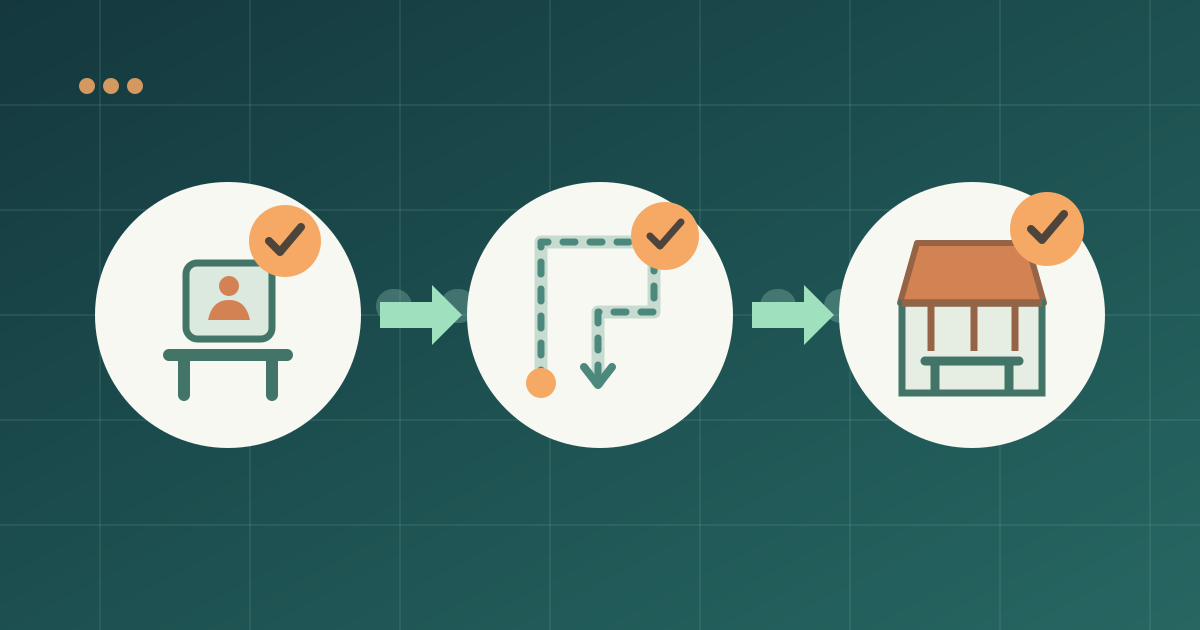
Prepare one arrival view before the first vendor
Download the market vendor arrival and stall handoff register (Markdown, English)
Start with the current approved stall map and expected-vendor list. Give each booking a stall reference, assigned arrival window, check-in point, approved unloading route and onsite contact channel. Mark which prerequisites the authorized organizer or venue lead has already cleared, without asking the arrival desk to make a fresh legal or technical judgment. Put the map version and last update time on the register. Brief the desk, route lead and stall lead on who can change an assignment; otherwise three separate teams may each tell a late vendor a different destination.
Confirm the booking and record actual arrival
At the designated check-in point, match the arriving vendor to the expected booking and stall reference. Confirm the named onsite representative and how the team can reach them during setup; use a work contact channel rather than collecting unnecessary personal details. Record actual arrival, the checker and any outstanding organizer decision. Give the vendor the current stall location, setup boundary and person who will receive them there. If a booking is missing, an extra vehicle appears or a stall reference conflicts, pause that assignment and send it to the named organizer lead instead of inventing space at the desk.
Hand over the approved route, not just a map pin
Before a vehicle or cart moves, the venue traffic lead must confirm the route and any current restrictions. The UK HSE advises event organizers to plan onsite transport, separate people and vehicles where possible, and design access for trade vehicles and pedestrians. These are UK guidance points, not a universal clearance: the venue-approved plan and local specialists control this site. Tell the vendor where to unload, where the vehicle goes afterward, whether an escort or marshal is required under that plan, and which route to use on foot. Record the route handoff and receiving lead; do not let the registration desk improvise vehicle instructions.[1][2]
Give late, absent and misplaced vendors a decision owner
Keep three statuses separate: expected but not yet arrived, arrived but not released to a stall, and stall handoff accepted. For a late vendor, check the approved access window and ask the venue lead whether arrival can still use the planned route; do not promise an exception. For a no-show, ask the organizer whether to hold the stall, contact a waitlisted vendor under the event terms, or leave it unused. If a stall is obstructed or a requested utility is missing, record the issue and route it to the relevant venue or technical owner. A blank stall should never quietly become an unapproved reassignment.
Reconcile the desk with the site before opening
Ask each stall lead to confirm the vendor reached the allocated space and accepted the location, or to log the open issue and decision owner. Compare those reports with the check-in register, then publish one current arrival status to the teams that need it. Mark a vendor as checked in only when that fact is true, and mark a stall handoff separately; neither mark certifies a structure, electrical connection, food operation or public opening. Transfer unresolved arrivals, access changes and empty stalls to the next named lead with a review time. After the event, use the actual arrival and exception record to improve the next edition’s instructions.
Sources and further reading
- Event transportUK Health and Safety Executive · Accessed
- Venue and site designUK Health and Safety Executive · Accessed