Event online community moderation plan template
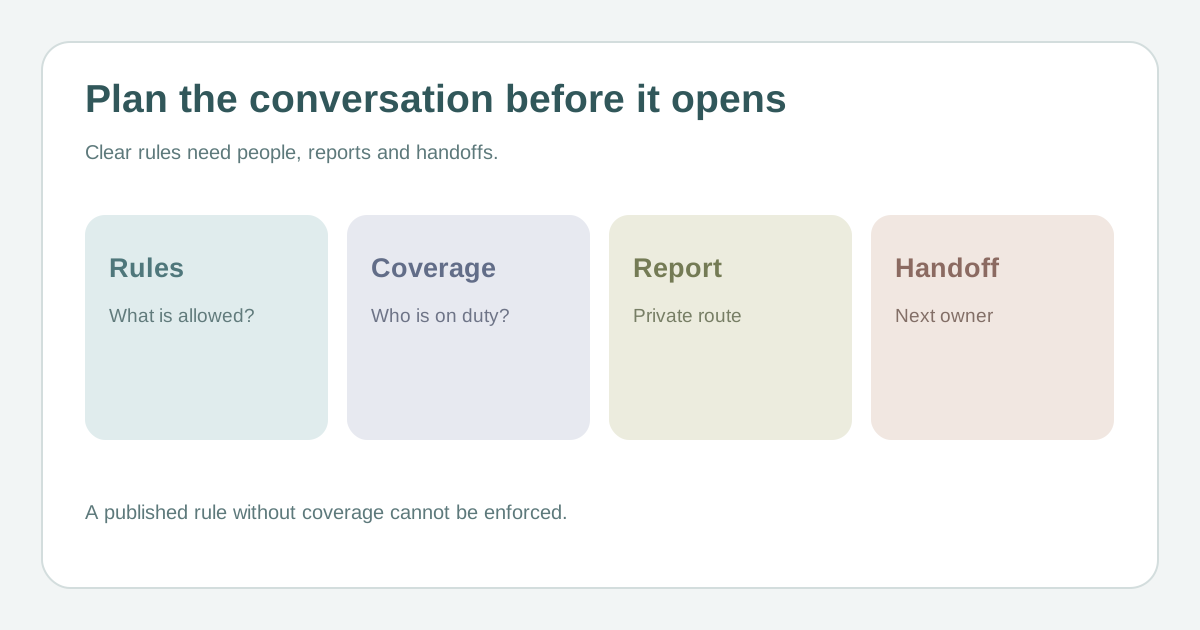
A chat room attached to an event needs its own operating plan: live questions, attendee introductions and the period after the event create different moderation demands. Use the editable worksheet to name channels, public rules, moderator coverage, report route and handoffs. It complements an on-site harassment procedure; it does not replace platform reporting or emergency response.
Boletolibre editorial team
Published
Name the space and its boundaries
Download the community moderation plan (Markdown, English)
List each place where attendees can post: event app, streamed session chat, forum or external group. State who may join, when the space opens and closes, what it is for, and where ticket, access or urgent safety issues go instead. Publish short behavior rules covering harassment, unwanted promotion, private information, impersonation and off-topic material, with examples suited to your audience.[1][2]
Assign people and test controls
Give each channel a moderator, backup and coverage window matched to the actual event schedule. Verify who can hide content, mute, remove users, close a thread and contact platform Trust & Safety. Rehearse these controls in the chosen platform, including mobile. Keep a separate support owner for registration or checkout problems so moderators do not promise account fixes they cannot perform.
Make reporting private and consistent
Provide a visible route for attendees to report content or behavior privately, including concerns about a moderator. Record a case reference, exact channel and time, observed rule, action, reviewer and follow-up status in a restricted log. Avoid copying sensitive screenshots into broad volunteer chats. Use the platform’s own report tools where its rules are implicated; escalate imminent safety issues through the event and venue’s approved channels.[1][2]
Decide action and message before conflict
Document who can warn, hide, pause or remove, when a second reviewer is needed, and how appeals or mistakes are handled. Prepare neutral public wording for a paused chat or removed post without exposing a complainant’s details. Keep examples as decision prompts, not automatic sanctions. If abuse crosses into an event-day or safeguarding concern, hand it to the trained lead with minimal necessary information.
Review after the session and event
At shift change, hand over active cases and controls, not a vague “all quiet.” After the event, announce the community’s closing or ongoing status and preserve only records needed under the approved policy. Review recurring rules confusion, response gaps and unanswered attendee questions before opening the next event space.
Sources and further reading
- Community Moderation Toolkit and TemplatesHigher Logic · Accessed
- Community Server GuidelinesDiscord Trust & Safety · Accessed