Event power requirements brief: what to collect before a quote
Before anyone sizes circuits or a generator, the organizer needs one reliable list of what requires power, where and when. Use this brief to collect vendor information and hand it to the venue and a competent electrical provider for design and approval. It is an information handoff, not a do-it-yourself electrical plan.
Boletolibre editorial team
Published
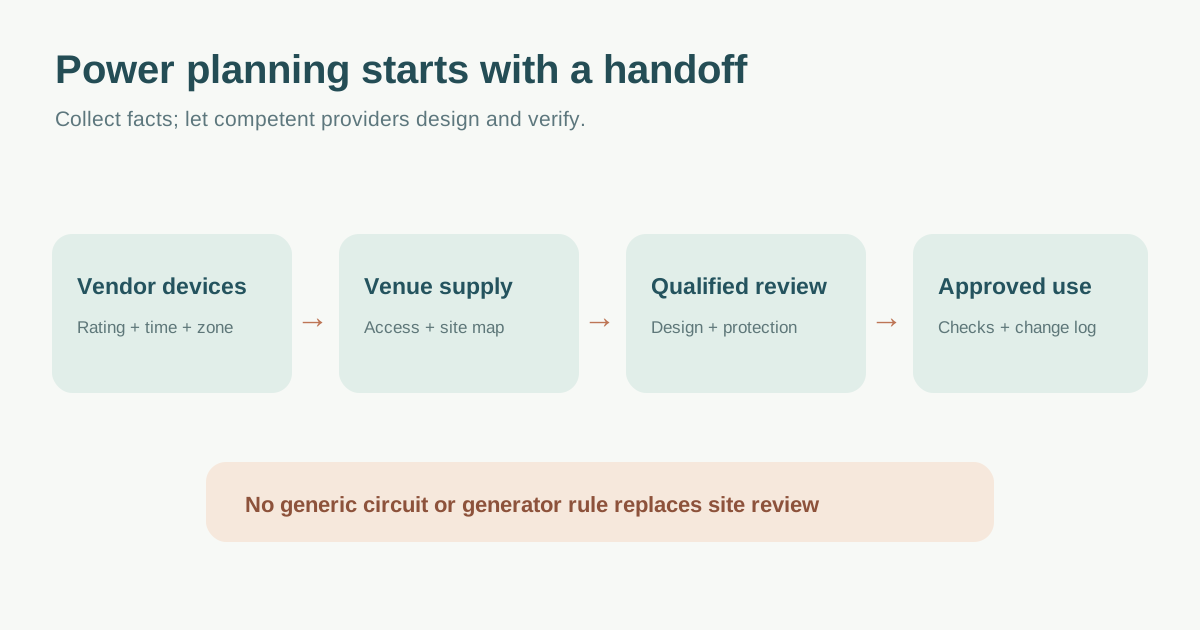
Inventory every powered item by vendor and zone
Ask AV, catering, exhibitors, check-in, ticket scanning, lighting and production vendors to list every device that will connect to event power. Record manufacturer or model, nameplate electrical data as provided by the vendor, connector type, expected operating period and whether the device starts or runs at the same time as others. Do not invent a load from the device name or silently convert voltage and current into a design number.
Separate always-on needs such as refrigeration, network equipment or essential communication from equipment used only at specific cues. Include charging, overnight and setup/strike periods. The leading Google checklist also groups equipment by vendor and zone; its fixed circuit percentages, generator multipliers and US plug assumptions are not transferable to every venue or jurisdiction.[1]
| Brief field | Ask the supplier for | Why it matters |
|---|---|---|
| Device and location | Model, quantity, zone and exact position | Supports a traceable plan |
| Electrical requirement | Nameplate rating, plug/connector and special startup needs | Lets the electrical provider verify compatibility |
| Timing | Setup, live, overnight and strike use | Shows overlapping demand |
| Continuity | Consequence of losing power and approved fallback | Identifies critical systems |
| Owner | Vendor contact and person supplying leads/adapters | Closes handoff gaps |
Record the actual supply and site conditions
Request the venue’s available supply details, connection points, access rules and the person authorized to confirm them. Mark equipment zones and proposed cable routes on the site plan, including public routes, service traffic, wet or outdoor areas and places where equipment must remain protected from the public. HSE event guidance explicitly includes layout, supply access, environment, timing, emergency power and temporary cable routing in electrical planning. Use those as questions for the qualified designer, not instructions for untrained staff to install a system.[2]
Identify who provides any temporary distribution, generator, fuel service, cable protection and isolation, then record who installs, inspects and operates each element. Venue control may be shared, so responsibilities and safety information need an explicit handoff.[3]
Have the electrical provider reconcile and approve the plan
Send the consolidated inventory and site plan to the venue and competent electrical contractor. Ask them to verify loads, phase/voltage and connector compatibility, distribution, protective devices, grounding, weather protection, cable routing and local rules. The organizer should not assign circuits, choose cable sizes or rely on a generic “80%” or “125% generator” rule from a blog. Those choices require site-specific engineering and applicable standards.[2][1]
Request a dated plan or quote with assumptions, exclusions, responsibility for connections and tests, and a process for late vendor additions. If a supplier cannot provide a device rating or changes equipment, leave that line unresolved until the qualified reviewer confirms it.
Close the loop before doors open
Keep the approved plan, zone map, vendor contacts and change log where the authorized site team can reach them. Agree on the inspection and operational checks appropriate to the installation, who can isolate power in an incident, and whom staff call for a fault. Keep the public and unauthorized workers away from electrical equipment and protect cable routes as required by the site plan.[2]
A successful test of one device does not approve the full installation. Record the final installed equipment against the approved brief, ask the competent provider to resolve differences, and update affected vendors and show operations before use.
Download the event power requirements handoff brief (Markdown, English)
Sources and further reading
- Event Power Needs: Vendor ChecklistQuickstaff · Accessed
- Electrical safety at eventsUK Health and Safety Executive · Accessed
- Venue and site designUK Health and Safety Executive · Accessed