Multilingual event website content workflow template
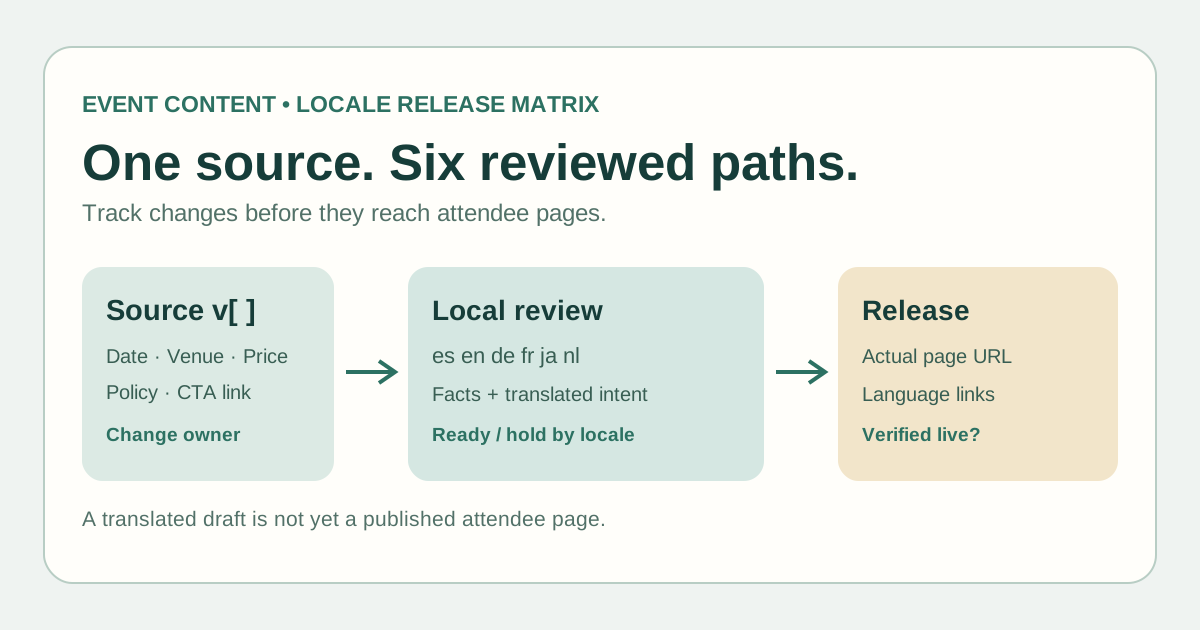
Event facts change after translation starts. A revised venue gate, ticket price or access instruction can make one language page misleading while the source page looks correct. This original workflow matrix gives every page and locale a source version, reviewer, decision and verified public URL. It is for editorial coordination; the website still needs its own routing, accessibility and search configuration.
Boletolibre editorial team
Published
Download the six-locale release matrix
Download the editable content workflow matrix (Markdown)
Copy a row for each page or reusable field in each real locale. The included six rows are a starter, not a claim that all six pages exist. Record the source version and translation status separately from publication and live URL verification.[1]
Approve a source version before translation
Give each content item a stable ID and a named source owner. Identify the edition, approved copy and high-risk facts: date and time zone, venue and entrance, prices, ticket availability, access and refund information, and checkout destination. Provide translators with context, intended attendee action and links to the authoritative source of each fact. Gridly's product-led template illustrates source IDs and dependency tracking; this worksheet uses a simpler, tool-independent record.[1]
Review local meaning and attendee actions
Assign a local reviewer who can check clarity and facts, not only spelling. For each locale, read the page as an attendee would, follow the registration or support link, and check date format, time zone, currency display and venue names against the actual event. Mark drafts, reviewed versions and holds explicitly. A machine-generated translation can be a draft, but its status must not silently become 'approved'.
Invalidate affected versions when source facts change
When the source changes, record what changed, affected content IDs and locales, and the owner of each re-review. A policy or price edit may require a fresh human decision and updated email or checkout copy; a small layout edit may not. Keep the old approved version identifiable so an urgent correction does not overwrite the audit trail. Release verified locales deliberately and communicate any temporary language gap honestly.
Verify what visitors and search engines can actually reach
Open each published URL and verify the visible language, core facts and links. A CMS 'published' flag is not evidence of a working page. If the site exposes separate language URLs, Google recommends distinct URLs and localized-version annotations; the alternate set should describe actual pages, including each page itself, rather than placeholders. This matrix records editorial readiness but does not implement hreflang or guarantee indexing.[2][3]
Sources and further reading
- 5 templates for managing multilingual contentGridly · Accessed
- Managing Multi-Regional and Multilingual SitesGoogle Search Central · Accessed
- Tell Google about localized versions of your pageGoogle Search Central · Accessed