Reserved seating vs general admission: an organizer decision guide
Reserved seating assigns a ticket to a specific place. General admission (GA) grants access to an unassigned area or section. The difference shapes what you promise at checkout, what inventory you sell, how people move through the venue, and what staff must resolve at the door. The leading organizer guide for this query emphasizes event type and possible sales benefits; this guide starts with the approved venue layout and the actual operating work. Neither format changes the safe capacity just because the ticketing screen is easier to configure.
Boletolibre editorial team
Published
Define what one ticket reserves
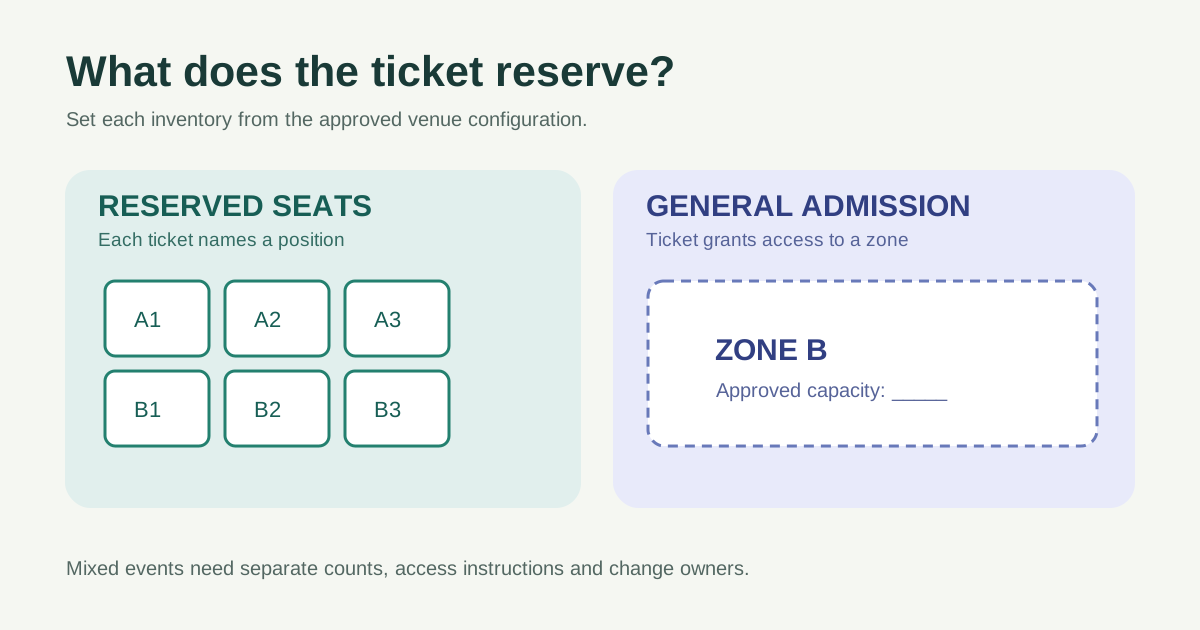
With reserved seating, the ticket identifies a seat, table place or other named position. The map and inventory must reflect the approved venue layout. With GA, the ticket grants entry to a specific area or zone without guaranteeing an exact position. A GA ticket can still have a section, time or category; “unassigned” does not mean “unlimited.” Eventbrite’s reserved-seating documentation shows specific seats and GA sections within its own venue map, illustrating how a mixed event can be represented in one product. Verify the chosen provider’s configuration and restrictions before selling.[2]
| Operating question | Reserved seating | General admission |
|---|---|---|
| Inventory unit | Exact seat or place | Approved count for the relevant zone |
| Buyer promise | Named position and viewing information | Zone entry; position may depend on arrival |
| Change after sale | Reassign seat and notify holder | Update zone allocation and entry instructions |
| Door check | Ticket, zone and seat/row if needed | Ticket, permitted zone and count |
| Mixed venue | Keep seat and GA inventories separate | Communicate any boundaries between zones |
Start from the approved venue plan, not the ticket quantity
Ask the venue and competent local team for the usable seating plan, zone boundaries, accessible positions, circulation routes and safe capacity for the actual event configuration. Count holds, crew, guest-list allocations and any blocked sightline seats before setting sellable inventory. UK HSE guidance says venue capacity depends on more than physical floor area, including entrances, exits and audience circulation. A layout change after tickets go on sale needs review; simply adding GA tickets or extra chairs is not a safe shortcut.[3]
The first organic TicketSource guide describes GA as flexible and reserved seating as easier for premium pricing. Treat those as possible commercial effects, not universal outcomes or evidence that capacity can change freely. The event-specific plan controls what can be sold.[1]
Plan arrival, access needs and changes
For reserved seating, check whether the buyer can select a seat, whether groups can sit together, how accessible seats are held or requested, and who resolves a disputed or unusable place. For GA, explain whether the ticket is standing or seated, which zone it covers, whether entry is first-come-first-served within that zone, and how guests who need an accessible position can arrange one. Do not promise that arriving early guarantees a particular view unless the venue can support that promise.
Review where queues form, how people find their section, and how they leave. HSE crowd-control guidance organizes these as arrival/entry, onsite circulation and departure. Use the appropriate local venue and safety arrangements rather than treating a ticket category as a crowd-management plan.[4]
Download the seating-format decision worksheet
The editable worksheet records the venue-approved layout, inventory by zone, the exact buyer promise, access and companion-seat process, entrance staffing, change owner and test cases. Use one row per zone; a mixed venue needs separate seat and GA counts, not a single undifferentiated total.
Download the reserved seating vs GA worksheet (Markdown)
Before launch, place a test booking in every category and check the buyer’s ticket, map, arrival instructions and staff scan view. Then simulate a blocked seat, group change and a full GA zone. If these cannot be resolved before opening, revise the offer or the operational plan.
Sources and further reading
- Reserved Seating vs General Admission: Which Is Right for Your Event?TicketSource · Accessed
- Create a reserved seating eventEventbrite Help Center · Accessed
- Venue and site designUK Health and Safety Executive · Accessed
- Put crowd controls in placeUK Health and Safety Executive · Accessed