Concession ticket eligibility: write a clear, respectful check-in policy
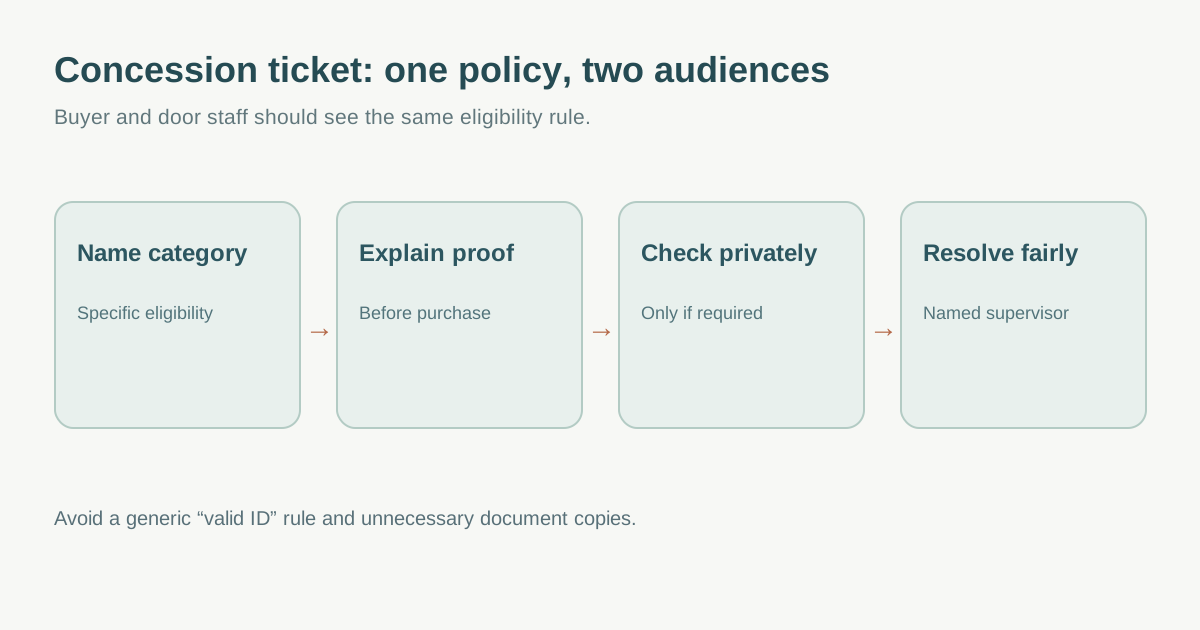
“Concession” has no single event-wide meaning. A buyer needs to know whether the offer covers them before paying, and door staff need a fair way to handle uncertainty without making a public judgment about someone’s circumstances. Set a specific policy for each ticket type, then publish and rehearse it.
Boletolibre editorial team
Published
State the actual categories and ticket rights
List each concession ticket separately: eligible group, ticket price, valid event date or zone, quantity limits, companion entitlement if any, and who approved the rule. Students, seniors, children and disabled attendees appear as examples in ticketing guides, but no category is automatically included at every event. TicketSource explicitly tells purchasers to check the event listing or contact the organizer because offers and proof differ. Do not assume a discount is legally required or that one provider’s examples establish local eligibility.[1][2]
Write buyer-facing language in positive, specific terms. For example, “Student ticket: for people enrolled on the event date; bring one of the listed forms of current student identification.” Do not use “valid ID required” without naming what staff will accept and when they will check. A free companion ticket, where offered, should have its own booking and entry instructions rather than being hidden inside a generic concession label.
Choose the least intrusive proof and a private fallback
For each category, decide whether any proof is actually needed, what is acceptable, whether it is checked at purchase or entry, and who may see it. Prefer a brief sight-check when that meets the event’s need; do not collect or retain document images by default. The UK ICO’s data-minimization guidance requires UK-regulated processing to be limited to what is necessary. Apply local privacy rules and qualified review where relevant, especially if evidence could reveal health or disability information.[2][3]
Provide a discreet route for someone whose document is unavailable, expired, inaccessible or does not match their ticket name. Staff should not debate a disability, financial need or age in a public queue. Escalate to a named supervisor, record only the operational outcome needed, and keep the guest’s entry status clear while the case is resolved. Do not invent a universal demand for disability cards.
Match checkout, confirmation and door instructions
Put category wording, acceptable evidence, check point, companion arrangements and contact route on the product page before payment. Repeat the essential proof reminder in the confirmation and pre-event message. Train sellers, support staff and door staff from the same policy revision; otherwise a buyer can be sold a ticket that staff later interpret differently.
| Policy item | Buyer sees | Staff verifies |
|---|---|---|
| Eligible group | Specific description before purchase | Use the same description |
| Evidence | Accepted options or no proof needed | Sight-check only if policy requires it |
| Companion | How to request and book | Linked entitlement and entry route |
| Mismatch | Private support contact | Supervisor and documented outcome |
If a concession policy changes after sales begin, review how already-issued tickets will be honored before editing the page. Do not silently replace the terms a buyer relied on.
Rehearse common door exceptions
Try a valid ticket with accepted evidence, a forgotten document, an unclear category, a companion arriving separately, and a ticket holder whose name changed. Observe where the line stalls and what information staff ask for. Agree what can be solved at the gate and what needs a private supervisor decision. The aim is a consistent event-specific process, not a claim that any guide guarantees legal compliance.
Download the concession eligibility and door-response card (Markdown, English)
Sources and further reading
- What Is a Concession Ticket? Eligibility, Discounts & RulesEventBookings · Accessed
- Ticket Types, Concessions & AccessibilityTicketSource Help Centre · Accessed
- Principle (c): Data minimisationUK Information Commissioner’s Office · Accessed